


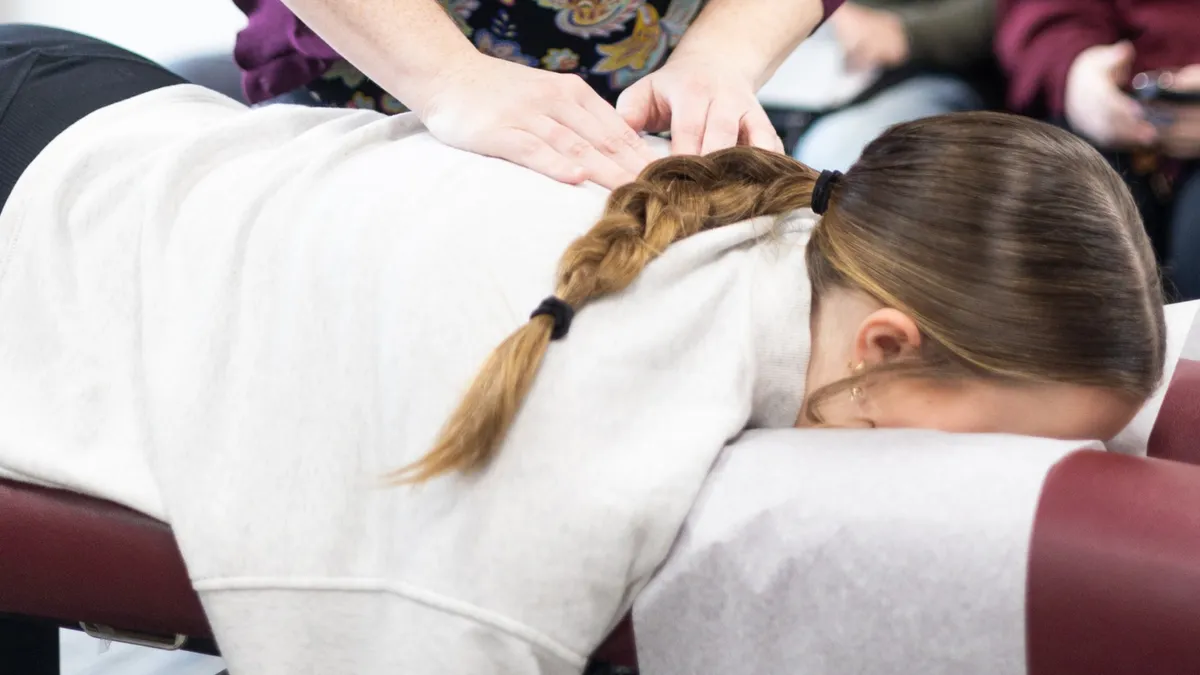
Can Spinal Decompression Help a Herniated Disc?
Can Spinal Decompression Help a Herniated Disc?
A herniated disc can make everyday activities difficult. You might feel pain in your lower back, discomfort that travels down your leg, or tingling and numbness that make sitting, standing, or walking uncomfortable. When these symptoms continue, it is natural to look for a treatment that can help you move more comfortably without surgery.
One option you may have heard about is nonsurgical spinal decompression therapy. It uses a specialized table to apply controlled pulling forces to the spine. But does it actually help a herniated disc, and what does the research say?
Let's look at how the treatment works, what studies have found, and why it may or may not be appropriate for your situation.
What Is A Herniated Disc?
Your spinal disc sit between the bones of your spine, helping absorb forces and allowing movement. Each disc has a tough outer layer and a softer inner portion.
A herniated disc occurs when material from inside a disc pushes through a weakened or damaged area of its outer layer. If the herniation irritates or compresses a nearby nerve, you may experience symptoms such as:
Lower back pain
Pain that travels into the buttock or leg, sometimes called sciatica
Tingling or numbness
Muscle weakness in the affected area
However, not every herniated disc causes symptoms. Some people have disc changes on an MRI without experiencing pain. That is why an imaging result should be considered alongside your symptoms, physical examination, and medical history.
How Does Nonsurgical Spinal Decompression Work?
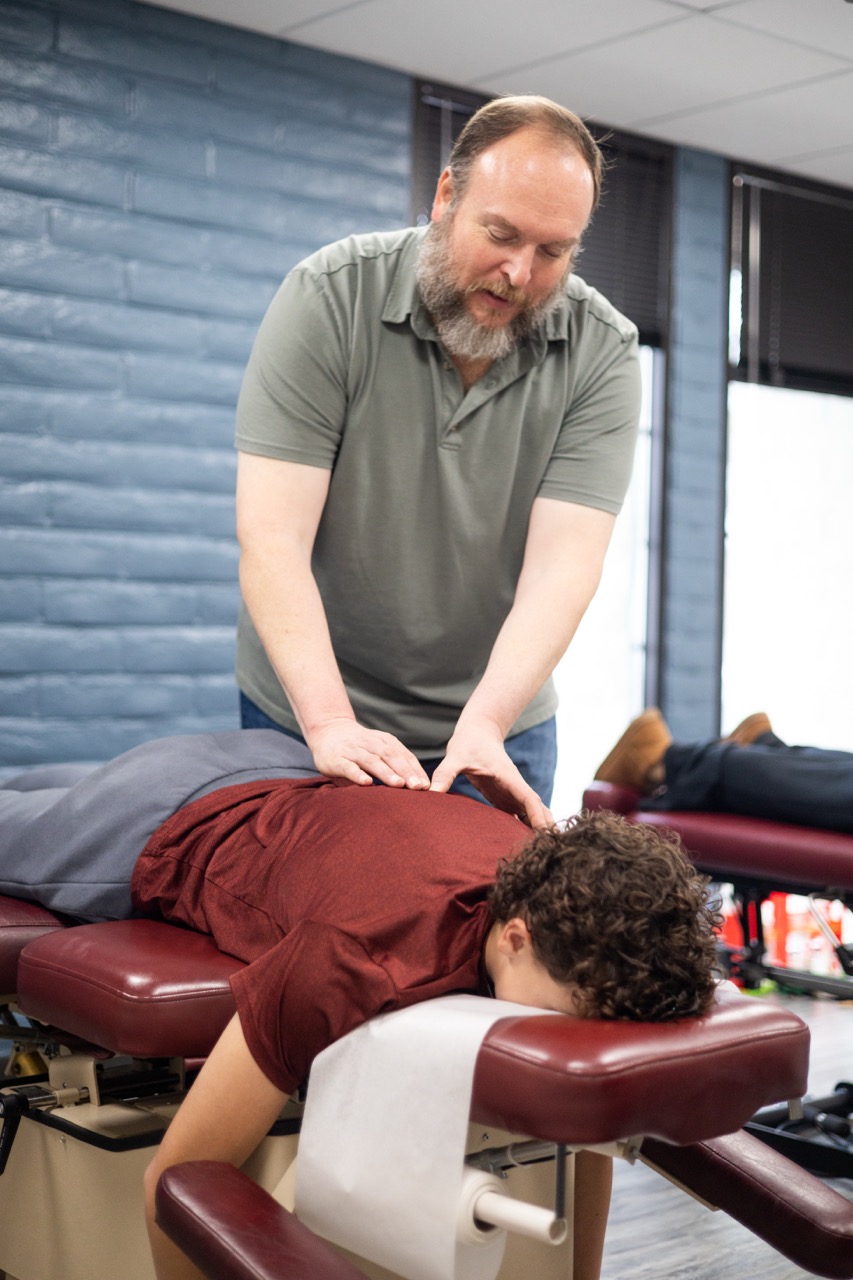
Nonsurgical spinal decompression is a form of motorized traction. During treatment, you lie on a specialized table while adjusting supports or harness help stabilize your body. The machine applies controlled pulling forces to the spine, with settings that may be adjusted according to your condition and tolerance.
The goal is to change the mechanical forces acting on the spinal structures and potentially reduce irritation around on affected area.
Some proposed explanations suggests that decompression changes pressure within the disc, which might influence disc movement or fluid exchange. However, these mechanisms are not fully established, and it has not been proven that treatment consistently pulls herniated material back into place.
It is also important to distinguish table-based spinal decompression from other forms of traction. Different devices and treatment protocols do not necessarily produce the same results.
Can Spinal Decompression Help a Herniated Disc?
Spinal decompression may help some people with a herniated disc, particularly when symptoms include lower back pain or pain traveling down the leg. However, results vary, and it is not a guaranteed solution.
Some studies suggest that traction-based treatments may improve pain and daily function in the short term. One 2022 study also found a reduction in an MRI-based measure of herniation size among patients who received nonsurgical spinal decompression. However, improvements in disc measurement do not always translate into greater pain relief, and more research is needed to understand the treatment's long-term benefits.
It's also important to remember that many herniated discs improve over time with appropriate conservative care. Spinal decompression may be one option to consider, but the right approach depends on your symptoms, medical history, and individual needs.
The bottom line: Spinal decompression may help certain patients, but it does not work the same way for everyone. A proper evaluation can help determine whether it is an appropriate option for you.
Is Spinal Decompression Right for Everyone?
Not necessarily. The right treatment depends on the source of your symptoms, how long have you had them, your overall health, and whether there are signs of nerve involvement.
A proper evaluation helps determine whether decompression is reasonable or whether another approach would be more appropriate. Some patients may benefit from a broader conservative care plan that includes education, appropriate activity modifications, exercises, and physical therapy.
Decompression should not automatically replace these approaches or be treated as a stand-alone solution. Your progress should be monitored, and treatment settings should be adjusted if symptoms worsen.
It is also important to discuss your medical history before beginning treatment. Certain conditions, including fractures, advanced osteoporosis, some spinal implants, and other medical concerns, may make decompression inappropriate. A qualified healthcare professional can help assess the risks and alternatives for your specific situation.
What If Spinal Decompression Doesn't Help?

There is no single treatment that works for everyone with a herniated disc. Many cases improve over time with appropriate conservative care, while others require additional evaluation or different treatment options.
If your symptoms persist, worsen, or interfere with daily activities, follow up with your healthcare provider rather than continuing a treatment that is not helping. Depending on your findings, your care plan may need to change.
Seek urgent medical evaluation if you develop a new loss of bladder or bowel control, numbness around the groin or saddle are, or rapidly progressing leg weakness. These can be signs of a serious spinal nerve problem that needs prompt attention.
Explore Your Options for Back Pain
A herniated disc does not automatically mean you need surgery, but it does not mean spinal decompression is the right answer for everyone.
The research suggests that some patients may experience short-term improvements with traction-based treatments. At the same time, questions remain about whether long-decompression reliably changes the size of a herniation.
At Optimal Health & Wellness, we believe treatment decisions should start with understanding the person, not just the MRI finding. If back pain or symptoms traveling into your leg are affecting your daily life, an evaluation can help you understand your options and determine what approach may be appropriate.
Contact Optimal Health & Wellness at (918) 477-7909 to learn more or schedule an appointment.
Reference
Wang, W., Long, F., Wu, X., Li, S., & Lin, J. (2022). Clinical efficacy of mechanical traction as physical therapy for lumbar disc herniation: A meta-analysis. Computational and Mathematical Methods in Medicine, 2022, 5670303. https://doi.org/10.1155/2022/5670303
Cheng, Y., Hsu, C., & Lin, Y. (2020). The effect of mechanical traction on low back pain in patients with herniated intervertebral disks: A systematic review and meta-analysis. Clinical Rehabilitation, 34(1), 13–22. https://doi.org/10.1177/0269215519872528
Choi, E., Gil, H. Y., Ju, J., Han, W. K., Nahm, F. S., & Lee, P. (2022). Effect of nonsurgical spinal decompression on intensity of pain and herniated disc volume in subacute lumbar herniated disc. International Journal of Clinical Practice, 2022, 6343837. https://doi.org/10.1155/2022/6343837
Cleveland Clinic. (2026, January 26). Spinal decompression therapy.https://my.clevelandclinic.org/health/treatments/10874-spinal-decompression-therapy
WebMD. (2023, June 5). Spinal decompression therapy: Surgical & nonsurgical. https://www.webmd.com/back-pain/spinal-decompression-therapy-surgical-nonsurgical


