


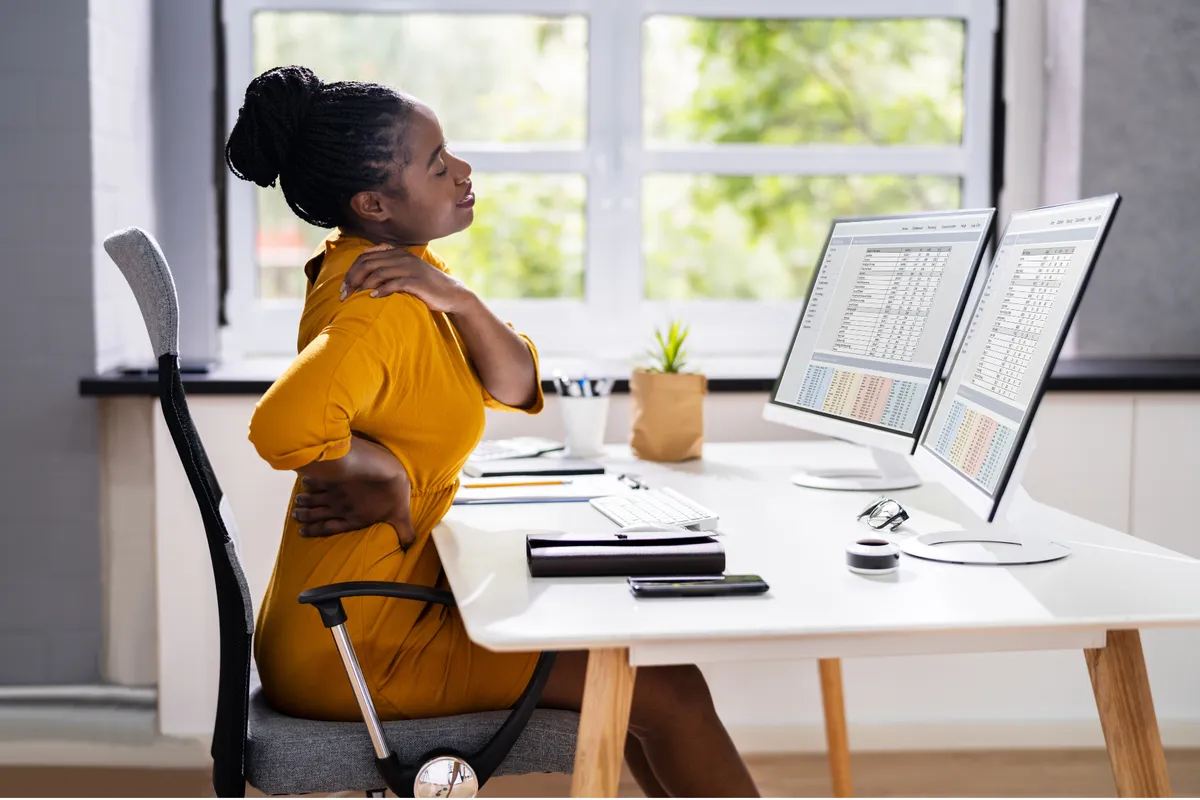
Does Poor Posture Affect More Than Your Back?
Does Poor Posture Affect More Than Your Back?
"Sit up straight."
"Stop slouching."
Many of us heard these reminders growing up. But posture is more than simply sitting or standing straight, and there isn't one perfect posture that everyone needs to maintain all day.
So can poor posture affect more than your back?
Yes, but probably not in the way you might think. Posture involves how your brain or nervous system is communicating with your head, neck, shoulders, spine, hips, and other parts of your body while you're sitting, standing, and moving. Research has found associations between certain postural patterns and neck pain, particularly in adults, but posture is only one piece of a much bigger picture.
The bigger concern isn't an occasional slouch. It's spending a long period in the same position without giving your body a chance to move.
Posture Is More Than Sitting at a Desk
Posture happens all day. You may spend your part of your day:
Working at a computer
Looking down at your phone
Driving
Feeding or holding a baby
Doing household chores
Carrying a backpack
Sitting through school or homework
Playing sports or exercising
Some positions may feel comfortable at first but become tiring when held for a long time. Changing positions and moving regularly can help reduce stiffness and give your muscles and joints a chance to move differently. There is no single "perfect" posture for every person or situation.
What Can Poor Posture Affect?
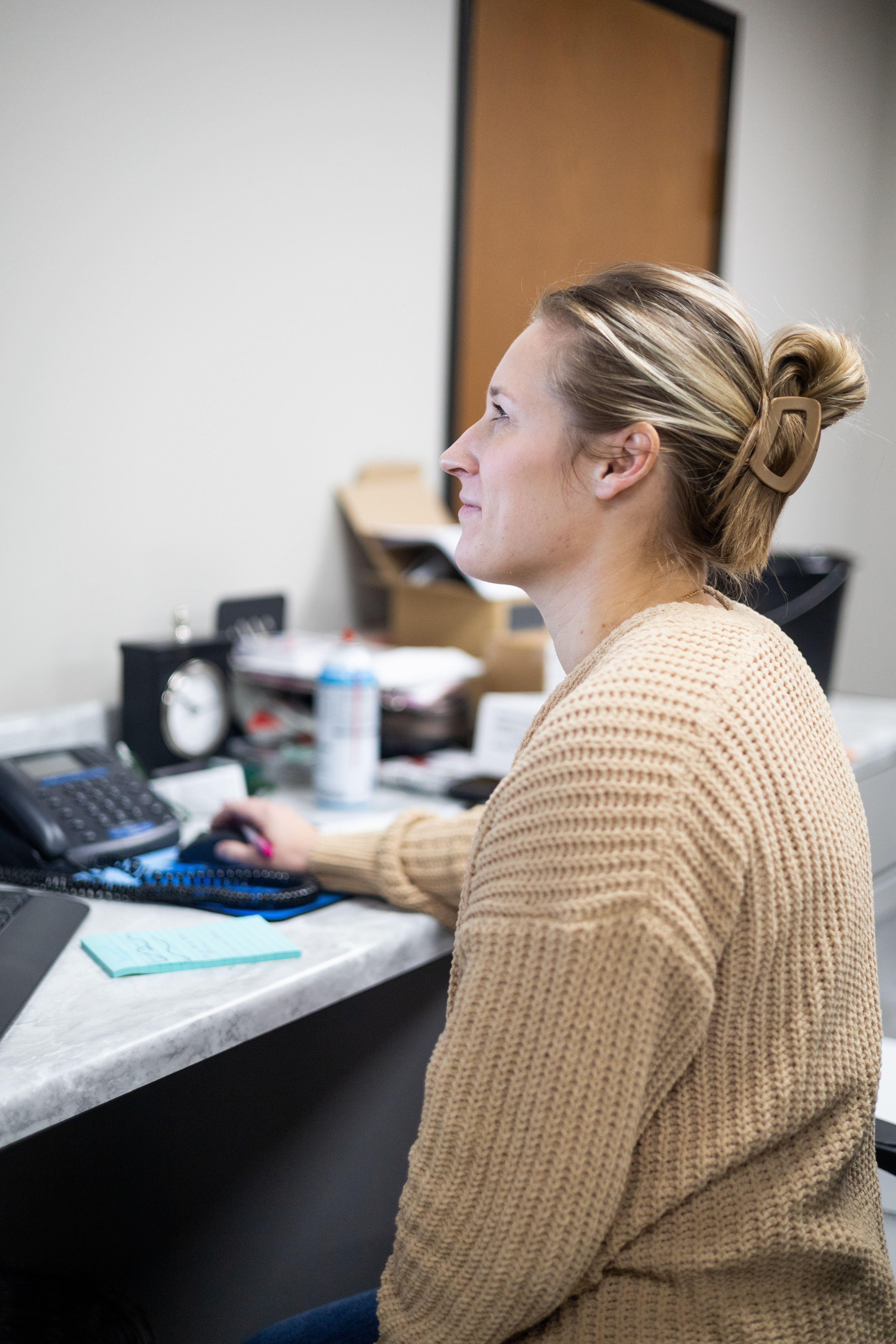
When your head and shoulders stay forward for extended periods, the muscles around the neck and upper back may have to work differently. Over time, this can contribute to muscle fatigue, stiffness, or discomfort.
Research has found differences in head and neck posture between adults with and without neck pain, as well as relationships between certain posture measurements and pain intensity or disability. However, the studies cannot establish that posture alone causes neck pain.
That's an important distinction.
Having a less-than-perfect posture doesn't automatically mean you're damaging your spine.
Pain can have many contributing factors including activity levels, muscle strength, injuries. stress, sleep. and how long you stay in one position.
What About Parents of Newborns?

Parents have their own unique posture challenges. Feeding, pumping, holding, carrying, and looking down at a baby can mean spending significant time in a forward or o rounded position. Instead of trying to hold yourself perfectly upright throughout every feeding or cuddle, focus on creating a comfortable, supported position.
Try supporting your arms, bringing your baby close rather than reaching forward, and changing positions throughout the day.
Taking care of yourself matters, too.
Newborn posture can often look like babies are "advanced" but actually they have a lot of tension. Newborns should be able to lift their head slightly up and down but not hold a position for several weeks. Sometimes parents think that their 2 week old is already rolling over but actually that is a sign of tension also.
Working slowly to develop good tummy time habits will pay off for good posture later as this simple exercise begins to advance the brain for higher levels of learning. Tummy time helps develop neck and lower back curves as well as eye tracking, balance and coordination.
Babies learn to crawl and walk through tummy time, not because they are put in a device.
What About Kids?

Children's posture is influenced by much more than how they sit at school. Think about the full day: schoolwork, backpacks, screens, sports, play, car rides, and time spent sitting.
For backpacks, make sure the pack fits appropriately, use both shoulder straps, and remove items your child doesn't need. During screen time or homework, encourage children to change positions and take movement breaks rather than expecting them to hold one "perfect" posture.
Your child's posture may also be a link to how their brain is adapting to outside stressors like school work, social cues, and auditory processing. Children often get labeled as disruptive in class or ADHD and it all has to do with how their brain and body are communicating.
The goal isn't to constantly correct your child. It's to help movement become a normal part of the day.
Small Changes Can Make A Difference
You don't need to overhaul your entire routine to become more aware of your posture.
Raise your screen when practical: Position your computer or tablet so you aren't spending long periods looking sharply downward.
Change Positions: If you've been sitting for a while, stand up. if you've been standing, sitting, or walking. Your body doesn't need to stay in one position to have "good posture"
Take movement breaks: Walk around, stretch, get some water, or simply stand up and reset.
Make your workplace comfortable: A supportive chair, appropriate desk height, and comfortable screen position can make it easier to work without constantly straining to find a comfortable position.
Keep moving: Walking, playing outside, biking, sports, dancing, and other forms of physical activity all give your body opportunities to move in different ways.
Feeding Positions: Alternate feeding positions by changing from right to left or try a new latch position. Once the baby is settled make sure your shoulders, arms and hands are relaxed. The baby will feed better with a relaxed parent.
When Should You Pay Attention to Pain?
An occasional stiff neck or sore back after sitting for a long time doesn't necessarily mean something is wrong with your posture.
However, don't automatically blame persistent pain on posture either.
If discomfort continues, gets worse, interfuse with normal activities, or is accompanied by symptom such as numbness. tingling, or weakness, it's worth talking to one of our chiropractors to determine what's contributing to it.
The Bottom Line
Good posture isn't about being perfectly straight all day.
It's about being aware of how you're positioning your body, creating comfortable environments, changing positions, and giving yourself plenty of opportunities to move.
So the next time you catch yourself slouching, you don't have to panic or spend the rest of the day forcing yourself upright.
Take a deep breath. Change positions. Move. And keep going.
Curios About Your Posture?
If you're wondering how your posture may be affecting the way you move or feel, you don't have to guess.
Optimal Health & Wellness offers a FREE Virtual Posture Assessment to help you take a closer look at your posture from the comfort of home. You can submit photos securely throughout the app, and our team will review your posture and provide feedback on areas you may want to pay attention to.
Ready to take a closer look?
Get Your Free Virtual Posture Assessment

If you have persistent pain or other concerning symptoms, an in-person evaluation with an appropriate healthcare professional may be more appropriate.
Reference
Professional, C. C. M. (2026, March 16). Posture. Cleveland Clinic. https://my.clevelandclinic.org/health/articles/posture
Mahmoud, N. F., Hassan, K. A., Abdelmajeed, S. F., Moustafa, I. M., & Silva, A. G. (2019). The Relationship Between Forward Head Posture and Neck Pain: A Systematic Review and Meta-Analysis. Current Reviews in Musculoskeletal Medicine, 12(4), 562–577.
Rani, B., Paul, A., Chauhan, A., Pradhan, P., & Dhillon, M. S. (2023). Is Neck Pain Related to Sagittal Head and Neck Posture?: A Systematic Review and Meta-analysis. Indian Journal of Orthopaedics, 57(3), 371–403.
National Library of Medicine. Guide to Good Posture. MedlinePlus.
National Spine Health Foundation. (2026). Spine Health: Posture and Workplace Ergonomics.
Revak, W., & Revak, S. (2024). Postures for Optimal Growth, Health, and Beauty: How the Tongue Supports Our Facial and Spinal Development. Pathways to Family Wellness.
Adams, J., & Adams, J. (2016). Nursing Posture and Its Role in Sympathetic Dominance. Pathways to Family Wellness.
Tagliarini, J. (2024). Backpack Safety 101. Pathways to Family Wellness.
Ohm, J. (2005). Identifying Causes for Spinal Stress in Children. Pathways to Family Wellness


