



The McGill Big 3: 3 Exercises for Building a More Resilient Core
Low back pain can make everyday activities, from getting out of bed to lifting something off the floor, more difficult than they should be. Building core stability can be one part of improving how your body manages these daily demands.
The McGill Big 3 is set of three exercises developed through the research of spine biomechanics expert Dr. Stuart McGill. The modified curl-up, side plank, and bird dogs are designed to develop core endurance and control while limiting unnecessary movement of the lower back.
Understanding how these exercises work, how to perform them correctly, and how to adjust them to your ability can help you determine whether they may be a useful part of your approach to back health.
What Are the McGill Big 3?
The McGill Big 3 consists of three exercises:
Modified Curl-up: Challenges the abdominal muscles while maintaining the nature curve of the lower back.
Side plank (side bridge): Works the muscle along the sides of the trunk and helps control sideways movement.
Bird dog: Challenges the back and trunk muscles to maintain control while the opposites arm and leg move.
Your core is more than your abdominal muscles. It includes throughout your abdomen and back, along with muscles around your hips and pelvis that contribute to movement and stability.
These muscles work together to help your trunk manage forces when you walk, lift, bend, or carry objects. Core stability is not simply about having strong abdominal muscles or being able to hold a plank for a long time. It also involves coordinating those muscles and developing the endurance to maintain control as demands change.
The McGill Big 3 provides a structured way to work on these qualities. Research supports stabilization exercises as one option for people with low back pain, although studies have not consistently shown that they work better than every other type of exercises. The goal is to find an appropriate fit for your needs, not to assume one routine works for everyone.
1. The Modified Curl-Up
A traditional sit-up involves lifting much more of your torso and repeatedly bending your spine. The McGill modified curl-up uses a much smaller movement.
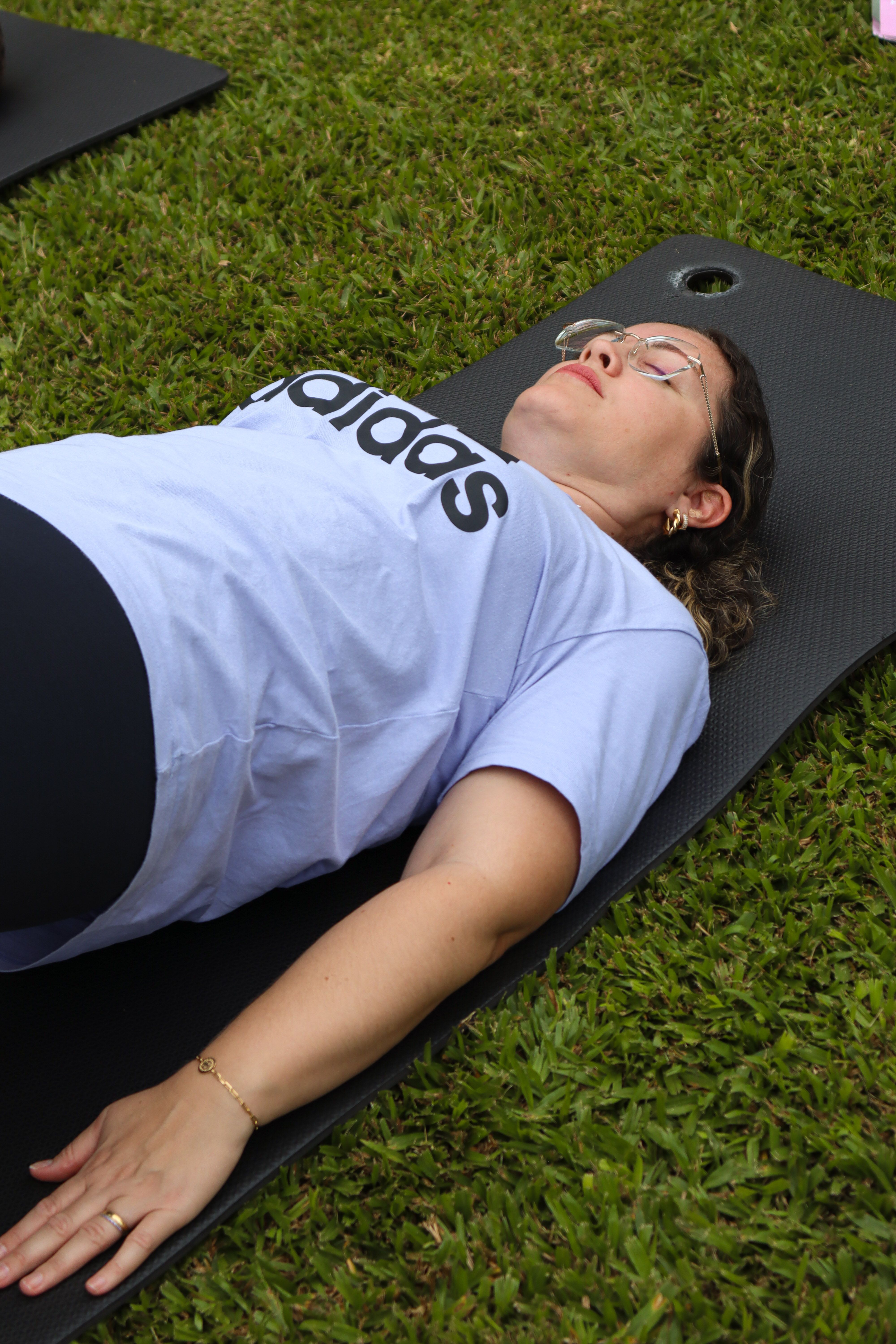
How to perform it:
Lie on your back with one knee bent and the other leg straight.
Place your hands beneath the natural arch of your lower back to help maintain its position.
Brace your abdominal muscles as through preparing for a light tap to your stomach.
Lift your head and shoulders slightly, keeping your lower back in its starting position
Hold briefly while breathing normally, then lower yourself with control.
The movement should be small. You are not trying to sit up or bring your chest toward your knees. Lifting too high can change the position of your lower back and turn the exercise into something closer to a traditional crunch.
What to watch for: Avoid pulling your head forward, holding your breath, or flattening your lower back against your hands. If you cannot maintain your position comfortably, reduce the lift or have your technique assessed.
2. The Side Plank
The side plank challenges the muscles along the sides of your trunk, including the obliques and quadratus lumborum. These muscles help control sideways movement and contribute to trunk stability.
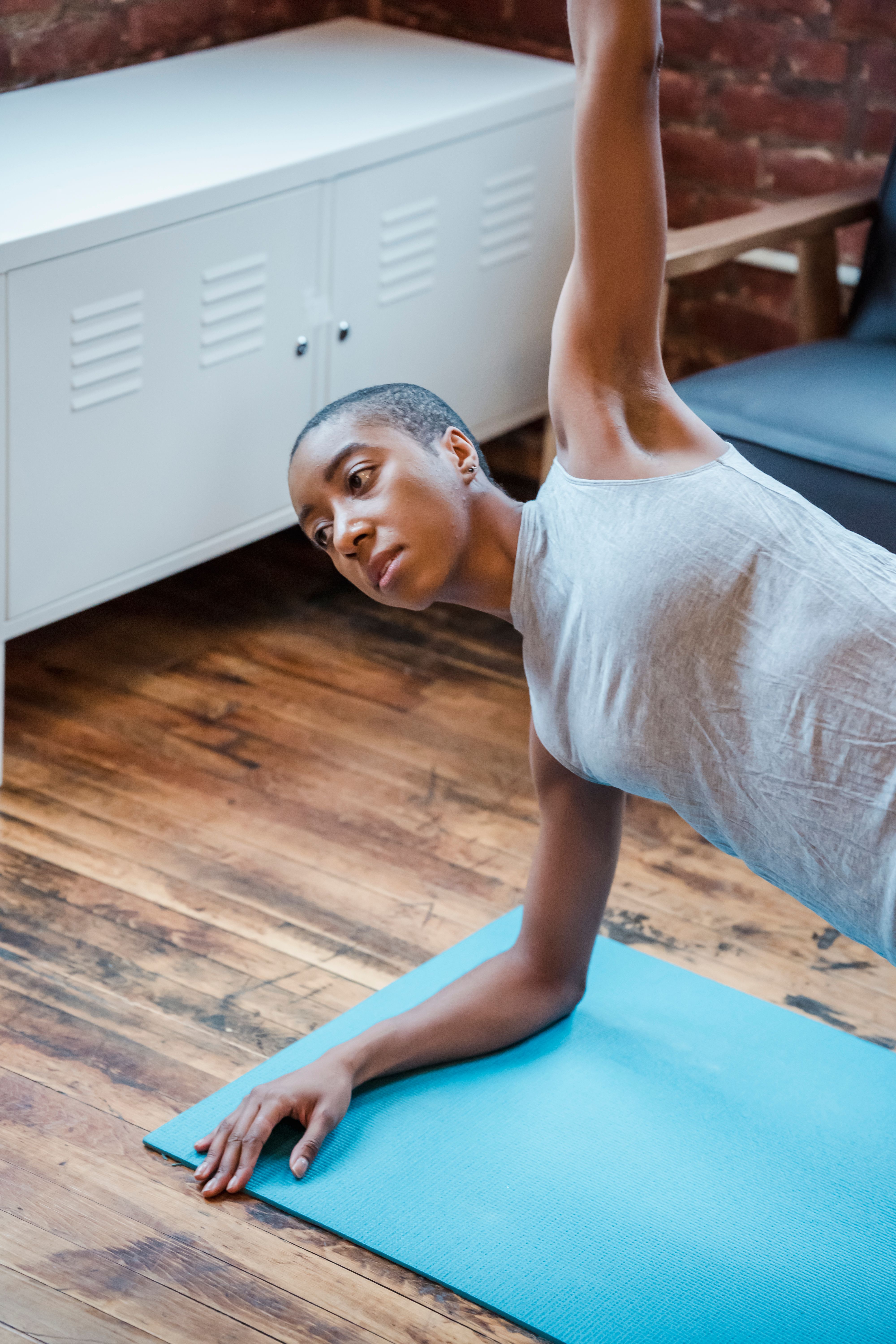
How to perform it:
Lie on your side with your elbow positioned beneath your shoulder.
Bend your knees to begin with an easier variation.
Brace your core and lift your hips until your shoulders, hips, and knees form a straight line.
Maintain the position while breathing normally, then lower with control.
Repeat on the other side.
As your control improves, you may progress to a full side plank with your legs extended and your body supported by your forearm and feet,
What to watch for: Keep your hips lifted rather than letting them sag toward the floor. Avoid shrugging your shoulder toward your ear or twisting your torso to make the hold easier. Start with the bent-knee version if the full position is too demanding. The purpose is to maintain good control, not to force yourself into the hardest variation.
3. The Bird Dog
The bird dog challenges your ability to keep your trunk steady while your arms and legs moves. This type of coordination is useful because activities often involve moving your limbs while your torso controls the resulting forces.
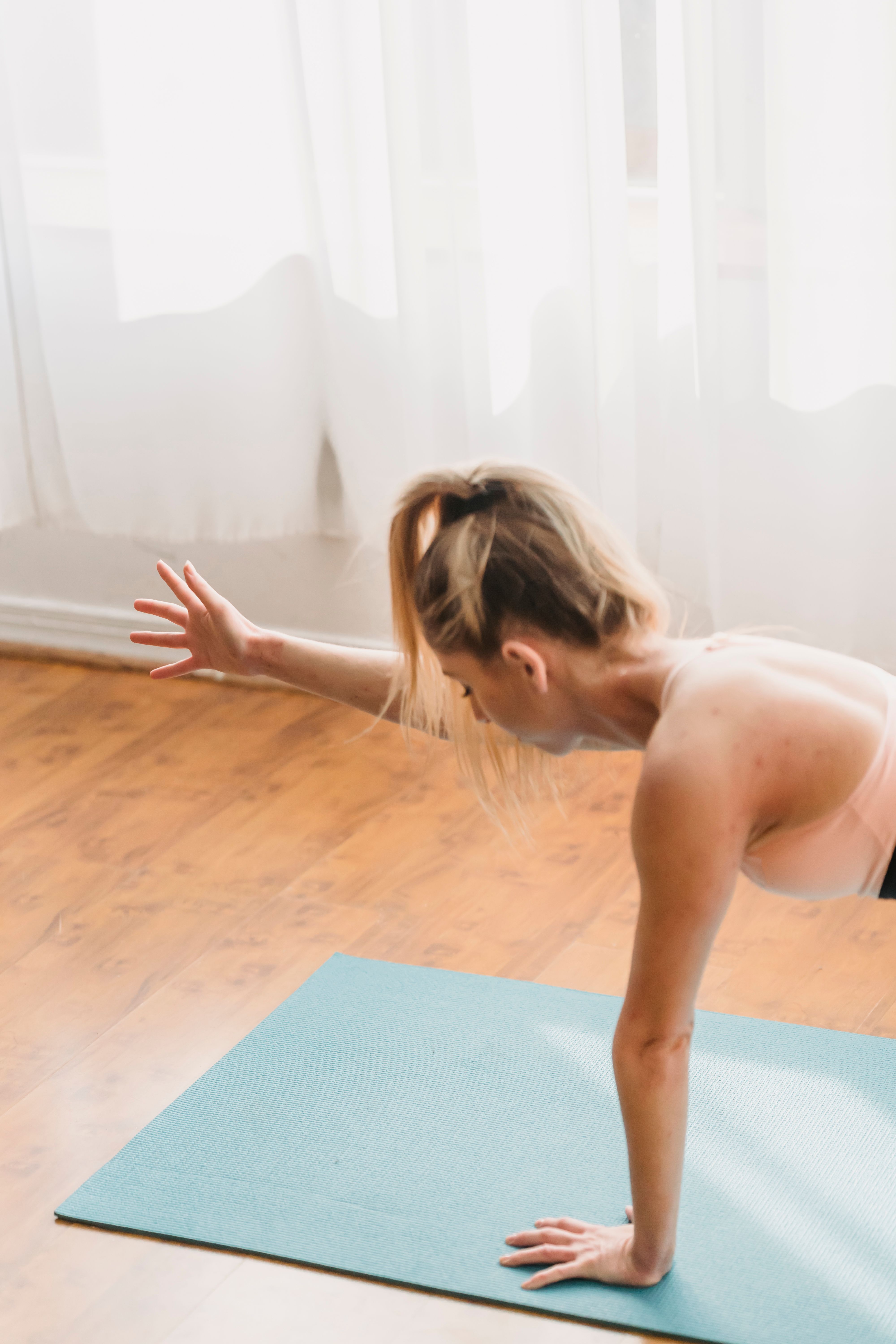
How to perform it:
Begin on your hands and knees, with your hands beneath your shoulders and knees beneath your hips.
Gently brace your abdominal muscles while maintaining the natural curve of your back.
Extend one arm forward and the opposite leg backward.
Keep your hips level and avoid arching your lower back or lifting your leg above the hip height.
Return to the starting position with control and repeat on the opposite side.
If coordinating your arm and leg is difficult, start by extending one leg at a time while keeping both hands on the floor. You can add the opposite arm when you can maintain your position comfortably.
What to watch for: Avoid rotating your hips, shifting your weight excessively, or raising your leg so high that your lower back arches. The goal is controlled movement at the hips and shoulders while the trunk remains steady.
How Many Repetitions Should You Do?
Dr. McGill commonly describes a descending repetition pattern for these exercises, using short holds to develop endurance without pushing technique to the point of fatigue. One example is six repetitions, followed by four, then two, with each repetition held for several seconds.
That is a starting framework, not a requirement for everyone. If you are new to the exercises or dealing with back pain, fewer repetitions or easier variations may be more appropriate. Rest between sets and pay attention to how your body responds.
Focus on maintaining your position and breathing normally. Longer holds are not automatically better, and progressing too quickly can make it harder it maintain good technique.
You should also consider how these exercises fit into your overall activity. Walking and gradually returning to movements you tolerate can complement a core exercise routine. Building a more resilient back involves more than completing three exercises on a mat.
Are the McGill Big 3 Right for Everyone?
The McGill Big 3 can be useful for developing trunk endurance and movement control, but the exercises are not a universal solution for every type of back pain. Your symptoms, movement tolerance, physical abilities, and goals all matter when deciding where to begin.
If an exercises causes sharp, shooting, or spreading pain, stop and reassess rather than pushing through it. A variation or a different approach may be ore appropriate. People recovering from spinal surgery or managing conditions such as osteoporosis should seek individualized guidance before starting a new routine.
Back pain accompanied by a new bowel or bladder problem, numbness around the groin or saddle are, or progressive leg weakness requires urgent medical assessment.
Building A More Resilient Back
The McGill Big 3 offers a practical starting point for working on core endurance and control. The modified curl-up, side plank, and bird dog each challenge a different part of the trunk while emphasizing controlled movement.
The important part is not simply completing the exercises. It is choosing the right variation, using sound technique, and progressing at a pace your body can tolerate.
At Optimal Health & Wellness, we look at how your spine moves, how you manage everyday activities, and what may be contributing to your discomfort. Understanding those factors helps us determine which strategies may be appropriate for you rather than relying on a one-size-fits-all routine.
If low back pain is limiting your daily activities, contact Optimal Health & Wellness at (918) 477-7909 to learn more about your opinions and schedule a visit.
Reference
McGill, S. M., & Karpowicz, A. (2009). Exercises for spine stabilization: Motion/motor patterns, stability progressions, and clinical technique. Archives of Physical Medicine and Rehabilitation, 90(1), 118–126. https://doi.org/10.1016/j.apmr.2008.06.026
Ghorbanpour, A., Azghani, M. R., Taghipour, M., Salahzadeh, Z., Ghaderi, F., & Oskouei, A. E. (2018). Effects of McGill stabilization exercises and conventional physiotherapy on pain, functional disability and active back range of motion in patients with chronic non-specific low back pain. Journal of Physical Therapy Science, 30(4), 481–485. https://doi.org/10.1589/jpts.30.481
Brumitt, J., Matheson, J. W., & Meira, E. P. (2013b). Core Stabilization Exercise Prescription, Part I. Sports Health a Multidisciplinary Approach, 5(6), 504–509. https://doi.org/10.1177/1941738113502451
McGill, S. (2012, August 17). Designing back exercise: From rehabilitation to enhancing performance. Backfitpro. https://www.backfitpro.com/designing-back-exercise-from-rehabilitation-to-enhancing-performance/
Carroll, B., (2025, August 28). Mastering the McGill Big Three: progressions, variations, and common pitfalls. Power Rack Strength. https://www.powerrackstrength.com/mastering-the-mcgill-big-three-progressions-variations-and-common-pitfalls/
Jhenderson. (2024, December 2). McGill Big 3 - North 40 Physical therapy. North 40 Physical Therapy. https://north40pt.com/mcgill-big-3/
Eren, Ş. (2026, October 5). The McGill Big 3: The Back-Pain exercises spine researchers recommend. Acibadem Hospitals Group. https://acibademinternational.com/blog/the-mcgill-big-3-the-back-pain-exercises-spine-researchers-recommend/
Sarah, & Sarah. (2022, April 13). The McGill Big 3 exercises for core stability. Northern Nevada Chiropractic. https://northernnevadachiropractic.com/blog/back-pain-prevention/the-mcgill-big-3-exercises-for-core-stability/