


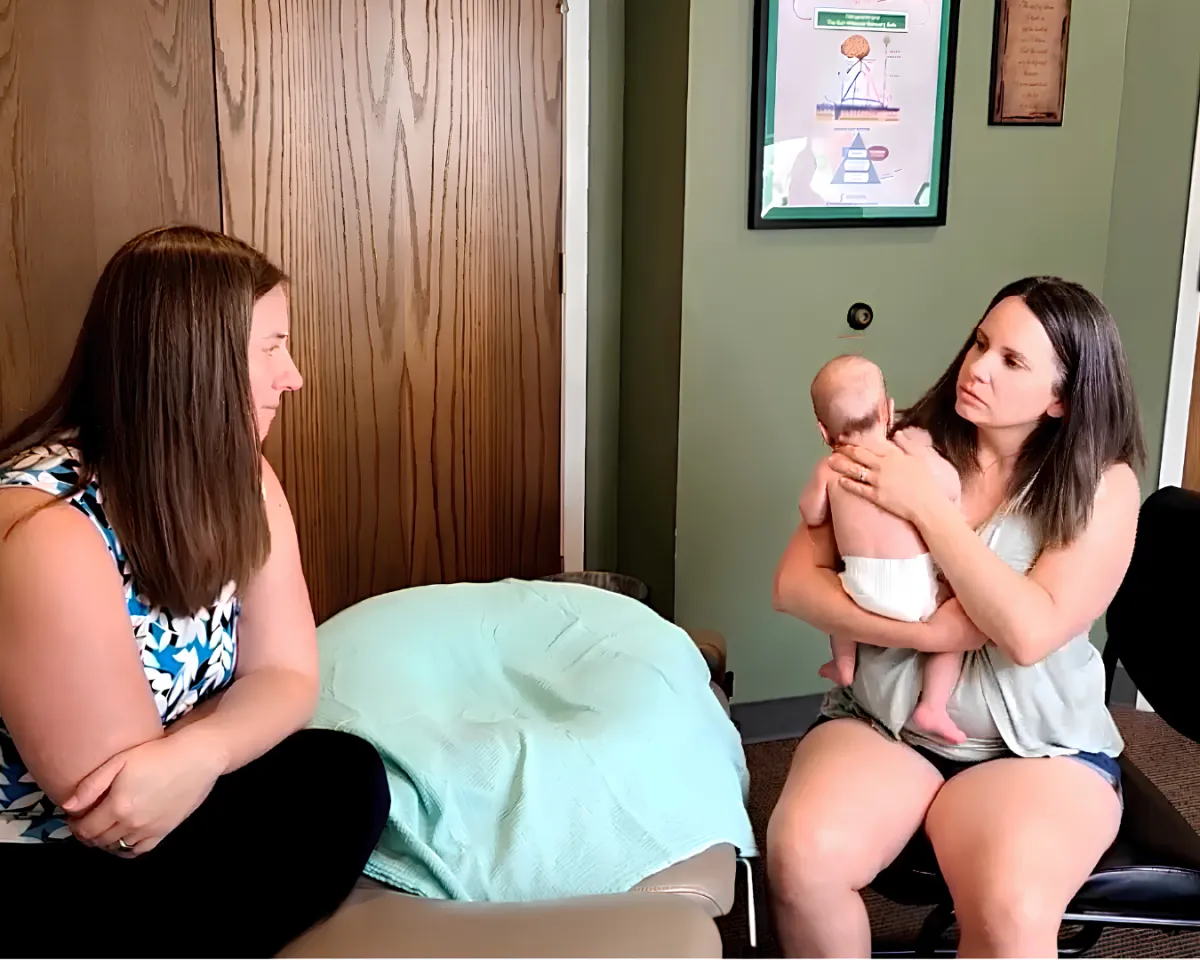
What Is an Infant Feeding Clinic?
What Is an Infant Feeding Clinic?
Feeding your baby is supposed to be natural, but that doesn't always mean it is easy.
Some babies latch beautifully from the beginning. Others may struggle to stay latched, become frustrated at the breast or bottle, make clicking sounds while feeding, tire quickly, or seem uncomfortable during meals. When feeding becomes stressful for both baby and parent, it can leave families wondering: "Why is this difficult?"
Infant Feeding Clinic can provide a place to look more closely at the different factors that may be affecting your baby's feeding experience.
Rather than focusing on one symptom or assuming there is one simple answer, Infant Feeding Clinic takes a closer look at how your baby is feeding, moving, coordinating their mouth and body, and responding during feeding.
Who Can Benefit from an Infant Feeding Clinic?
Infant Feeding Clinic is a specialized setting where babies and their families can receive support when feeding isn't going as expected. Feeding difficulties can occur with both breastfeeding and bottle-feeding, and they can look different from one baby to another. Some babies may have difficulty latching, while others may struggle with sucking, swallowing, coordination, positioning, or staying comfortable throughout a feeding.
Because feeding involves several systems working together, identifying the right support may require looking beyond the feeding itself. Depending on the baby's need, care may include lactation support, feeding assessment, or evaluation of movement and musculoskeletal function.
The goal isn't simply to tell parents what they are doing wrong. It's to better understand what may be contributing to the feeding challenge and determine the next appropriate help.
Infant Feeding Clinic Looks at the Whole Feeding Picture
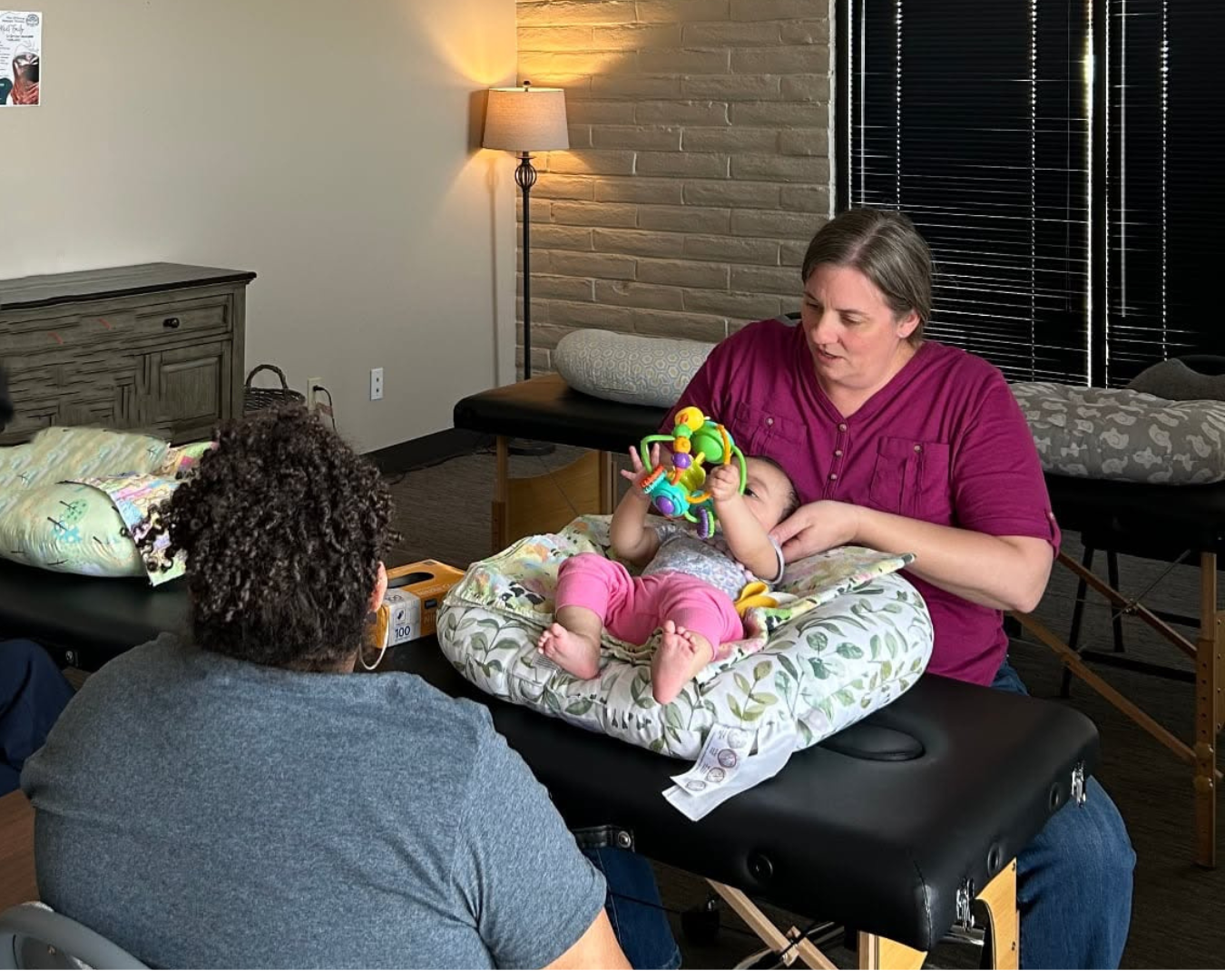
One of the most important things to understand about infant feeding care is that there isn't a single solution that works for every baby.
A baby who is having trouble latching may need lactation support. Another baby may need help with oral000000-motor skills. Another may require evaluation for a medical or development concern. Some babies may benefit from support for positioning, movement, or body tension alongside other feeding interventions.
As Catron et al (2024) explain in Pathways to Family Wellness:
"There is no secret algorithm or one-size-fits all-solution"
Every baby has a different history, or temperament, feeding pattern, and set of needs. Good feeding care starts by understanding the individual baby rather than trying to fit every family into the same treatment plan.
Is an Infant Feeding Clinic Only for Breastfeeding?
No.
Although breastfeeding concerns are a common reason families seek feeding support, babies can experience difficulties with bottle-feeding and other stages of feeding as well.
An infant may have difficulty:
Latching onto the breast
Maintaining a bottle seal
Coordinating sucking and swallowing
Managing milk flow
Transitioning between breast and bottle
Moving from bottles toward cups
Progressing to different food textures as they develop
Professional infant feeding clinic programs may work with babies experiencing breast, bottle, or spoon-feeding difficulties. This means Infant Feeding Clinic isn't simply a place for breastfeeding problems. It can be a resource for understanding how your baby is developing their feeding skills.
Who May Be Involved in Infant Feeding Care?
Infant Feeding is often best supported through collaboration. Depending on the baby's need, the care may include a:
Lactation Consultant: A lactation consultant can help evaluate breastfeeding technique, positioning, latch, milk transfer, pumping, and other lactation concerns. An IBCLC is a professional with specialized training and certification in lactation care.
Pediatrician: A pediatrician can evaluate your baby's overall health, growth, development, and medical concerns that may be affecting feeding.
Feeding therapist: Occupational therapist and speech-language pathologist with appropriate feeding expertise may evaluate oral-motor skills, swallowing, sensory factors, and other feeding-related concerns.
Other Specialists: Depending on the situation, a baby may also need evaluation or support from other specialist, such as pediatric dentist, registered dietitian, or medical specialist.
Chiropractic: Within a collaborative model of care, a pediatric chiropractic may evaluate areas, such as movement, body tension, and musculoskeletal function. Seeing a chiropractor who has advanced training in feeding challenges can be especially helpful as this training is an addition to what is taught in school.
The strength of collaborative care is that each professional brings a different perspective. As the Pathways Wellness puts it “Each provider’s expertise complements the other’s…”
At Optimal Health & Wellness, these areas of care can begin in one place, with additional providers involved when a baby’s needs require specialized evaluation outside the clinic’s scope.
What Can Parents Expect From an Infant Feeding Clinic?

Parents often arrive at a feeding appointment feeling frustrated, exhausted, or even worried that they’ve somehow failed.
You haven’t.
Feeding difficulties can be complicated, and asking for help doesn’t mean you’re doing something wrong. It means you’re paying attention to your baby’s needs.
A feeding clinic can give you an opportunity to:
Understand: Learn more about what may be contributing to your baby’s feeding challenges.
Observe: Look closely at how your baby feeds rather than relying only on what happens during a quick appointment.
Ask questions: Talk openly about concerns that may be difficult to explain during a routine visit.
Create a plan: Identify practical next steps based on your baby’s individual needs.
Connect with support: Determine whether your baby may benefit from additional care or referral to another qualified provider.
Most importantly, you don’t have to navigate every feeding challenge alone.
You’re Baby Doesn’t Have to “Just Figure It Out”
It can be tempting to assume that feeding will eventually become easier on its own. Sometimes it does. But if every feeding leaves you wondering whether your baby is getting enough, why they can’t stay latched, or why feeding seems so uncomfortable, it’s okay to ask for help.
Infant Feeding Clinic provides a space to slow down, look at the bigger picture, and understand what may be happening during feeding.
At Optimal Health & Wellness, we believe parents deserve to feel supported, not blamed, when feeding isn’t going according to plan. Our goal is to help families better understand their baby’s feeding needs and guide them through these challenges. Families can receive chiropractic care, myofascial and craniosacral care, and lactation support in one place.
Dr. Sonda Powell has been caring for moms and babies as a chiropractor for over 20 years. After seeing the struggles many moms faced when trying to find lactation support, Dr. Sonda obtained her International Board Certified Lactation Consultant (IBCLC) certification. This allows her to provide specialized breastfeeding support as part of a more comprehensive approach to infant feeding care.
Feeding is more than getting milk from point A to point B. It’s a complex developmental process, and sometimes your baby simply needs the right team to help you understand the pieces.
If you’re concerned about your baby’s feeding, reach out to Optimal Health & Wellness to learn more about our Infant Feeding Clinic and how we may be able to support your family.

References:
Catron, N., Poplin, J., Gessne, S., & Guelzow, B. (2024, December 16). Improving infant feeding through collaborative care. Pathways to Family Wellness. https://pathwaystofamilywellness.org/breastfeeding/improving-infant-feeding-through-collaborative-care.html
Infant Feeding & Nutrition Clinic | Cleveland Clinic Children’s. (n.d.). Cleveland Clinic. https://my.clevelandclinic.org/pediatrics/departments/infant-feeding-nutrition-clinic


