



Why Your Back Hurts: Understanding the Spine Through the McGill Method
Why does one person experience back pain after sitting at a desk all day, while another feel it after lifting something or going for a walk? And why can the same activity bother someone one day but feel manageable the next?
Back pain isn't always as simple as identifying one painful are. The spine works together with the hips, pelvis, and surrounding muscles to support movement and handle the physical demands of everyday life. Previous injuries, daily habits, and the way the body responds to different movements can all influence how back pain develops.
Understanding these factors can offer a better perspective on why back pain happens, why it affects people differently, and why an individualized approach to spine health matters,
Your Spine Handles More Than You Think
The spine does much more than keep you upright. It supports your body, protects the spinal cord and nerves, and allows you to bend, rotate, reach, and move through everyday activities. It also works together with the pelvis, hips, and surrounding muscles. When you pick up a child, carry groceries, get out of a chair, or exercise, these structures share the physical demands of the movement.
The way those demands are distributed can vary from person to person. Your physically condition, movement habits, previous injuries, and the activities you perform regularly can all influence how your back responds.
For example, someone who spends most of the day sitting may have different physical demands from someone who regularly lifts heavy objects at work. An athlete may need to prepare their back for repeated sport-specific movements, while someone else may want to return to walking or gardening comfortably.
There isn't one movement pattern that works perfectly for everyone. What matters is understanding the demands your body faces and whether it has the capacity to handle them.
Why Everyday Movements Can Contribute to Back Pain
Sometimes people can identify the exact moment their back started hurting. Other times, discomfort develops gradually without one obvious incident. Repeated activities may play a role. Think about how often you bend forward to pick something up, sit in the same position, twist to reach for an object or lift items throughout the day.
One movement may not cause a problem on its own. However, repeating the same movement under certain conditions, especially when combined with additional physical stress. Our bodies need appropriate movement and loading to maintain strength and function. The goal is to understand when the demands may be more than the body can comfortably manage.
That's why looking at someone's daily routine can be just as important as discussing their exercise program. If a particular activity repeatedly aggravates their symptoms, changing that pattern may be an important part of their overall care.
Your Hips and Spine Work Together
One area that deserves attention when discussing back pain is the relationship between the hips and the spine. Consider bending down to pick up a box. Ideally, your hips and knees contribute to the movement rather than placing all the motion through your lower back.

Learning to use a hip hinge can be helpful for some people. It allows more movement to come from the hips while keeping the spine in a more controlled position during certain lifting activities.
However, this doesn't mean the spine should never bend. Spinal movement is a normal part of many everyday activities, occupations, and sports. The amount and type of movement a person can comfortably tolerate will depend on their individual circumstances.
The goal is to develop movement strategies that suit the task and the person performing it, not to force everyone into the same posture or technique.
Back Pain Isn't Always About Posture
You've probably heard someone say that poor posture is the reason for back pain. While certain positions may contribute to discomfort for some individuals, posture alone does not explain every case.

Research examining the relationship between spinal movement and changes in low back pain has found that improvements in pain or activity limitations do not always occur alongside measurable changes in movement. In other words, someone can feel better without necessarily changing the way their spine moves.
Back pain can involve several interacting factors, including physical demands, tissue sensitivity, previous injuries, activity levels, sleep, and stress.
This is why I don't believe in simply looking at someone's posture and deciding that it explains everything. The more useful approach is to understand their symptoms, consider their individual circumstances, and determine what may be contributing to their discomfort.
Building a Back That Can Handle Everyday Life
When someone experiences recurring back pain, the goal shouldn't simply be to avoid anything that cause discomfort. Avoiding every movement can make it harder to return to normal activities. On the other hand, repeatedly pushing through movements that consistently worsen symptoms may not be helpful either.
A better approach is to understand what the back currently tolerates and gradually work toward improving its capacity. Depending on the individual, this may involve adjusting lifting habits, changing how certain activities are performed, improving muscular endurance, or gradually returning to physical activities that have become difficult.
The important part is that progress should be based on the person's response. An exercise or movement strategy that works well for one patient may not be appropriate for another.
The objective is not just to feel better while resting. It's to improve your ability to move, work, exercise, and participate in the activities that matter for you.
How We Approach Back Care at Optimal Health & Wellness
At Optimal Health & Wellness, we recognize that back pain can affect everyone differently. Our approach begins with understanding each patient's symptoms, daily activities, and individual needs before discussing appropriate care options.
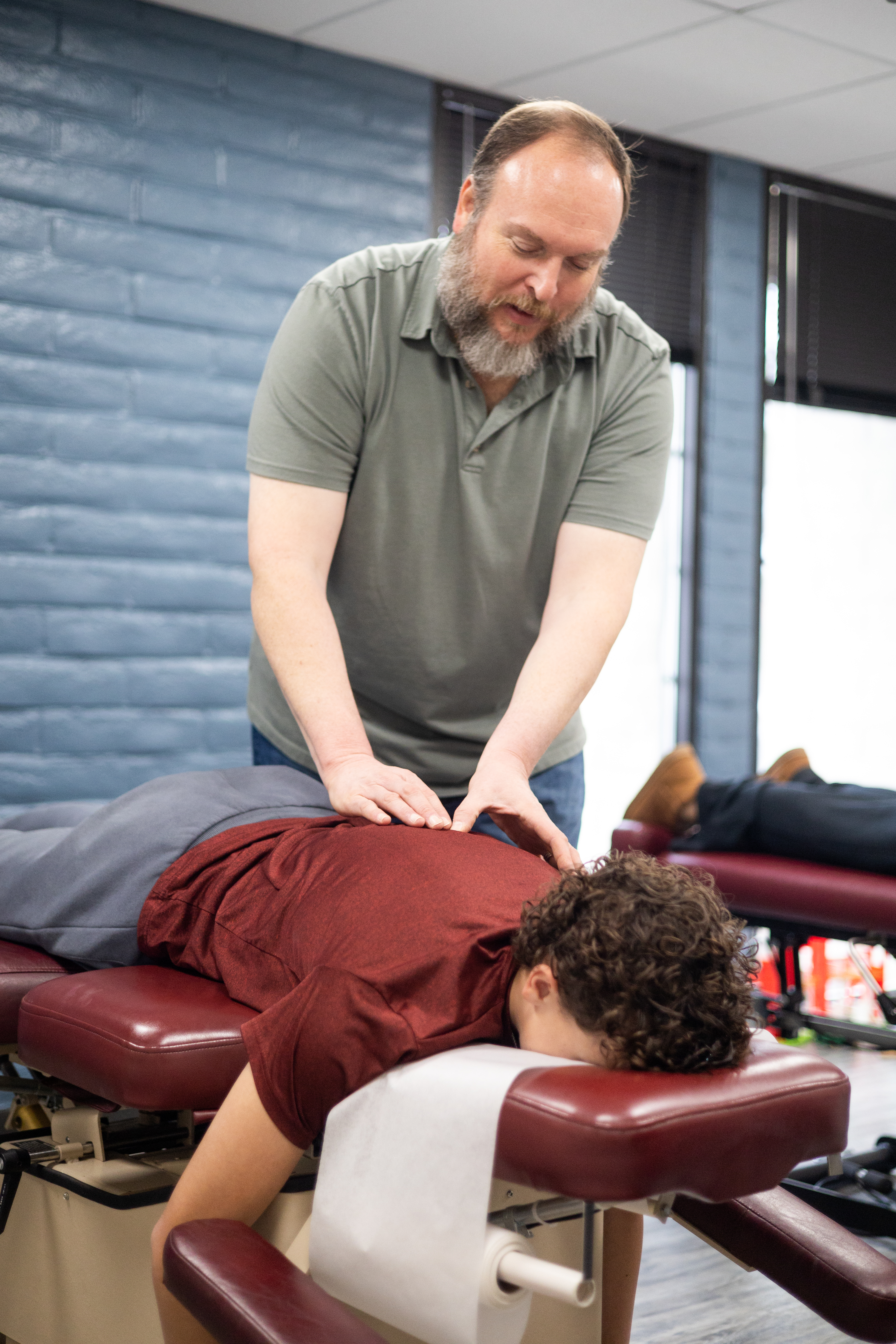
One of the chiropractic technique we offer is Cox Flexion-Distraction, a technique I am certified in and have practices for 25 years. It used a specialized chiropractic table and controlled movements to provide a gentle, hands-on approach to spinal care.
Whether this technique is appropriate depends on the patient's condition and examination findings. Our goal is to provide care that considers that individual, help address their concerns, and supports their ability to return to the activities they enjoy.
Understanding Your Back, Don't Just Ignore the Pain
Back pain can affect how you work, exercise, sleep, and enjoy everyday life. Understanding how your spine responds to movement and physical demands is an important step toward making informed decisions about your care.
You don't have to assume that every ache is caused by poor posture, a weak core, or one particular movement. Your symptoms deserve a closer look.
If back pain is interfering with your daily activities, Optimal Health & Wellness is here to help you better understand what's going on and explore appropriate care options.
Reference
McGill, S. (2021, November 12). Master Your Back Pain: All Back Pain Has a Cause. Backfitpro.
McGill, S. (2023, February 27). What Causes Back Pain? An In-Depth Look at the Trainer's Role With Clients Who Suffer From Back Pain. Backfitpro.
McGill, S. (2018, October 26). Empowering Self Advocacy: Taking Charge of Your Back Pain. Backfitpro.
Wernli, K., et al. (2020). Does movement change when low back pain changes? A systematic review. Journal of Orthopaedic & Sports Physical Therapy, 50(12), 664–670. https://doi.org/10.2519/jospt.2020.9635
Nyayapati, P., et al. (2022). Compensatory biomechanics and spinal loading during dynamic maneuvers in patients with chronic low back pain. European Spine Journal, 31(7), 1889–1896. https://doi.org/10.1007/s00586-022-07253-4
Walton, J. D. (2023, October 3). An Interview with Professor Stuart McGill, The Back Mechanic. HFE.
Bowman, E. (2026, October 16). The McGill Method: Common Misconceptions. Physio Network.